In our last deep dive, we talked about EDR—the "self-cleaning magnet" that handles the sodium, salts, and ions in wastewater. However, in the world of sustainability, merely treating polluted resources is the bare minimum. The real game-changer for waste reduction—is mining from the wastewater.
What caught my attention was a compelling line from the TSMC website:
"In July 2020, a backgrinding wastewater recycling system was officially launched... By January 2021, TSMC recycled 15,000 metric tons of backgrinding wastewater and generated 30 metric tons of industrial-grade silicon products."
It begs the question: Can waste be turned into a revenue stream?
Disclaimer: While many technologies can turn industrial waste (silicon particles, in our case) into commodities, I’m focusing on the high-efficiency methods actually used by TSMC in this article.
The Problem: The "Silicon Flour"
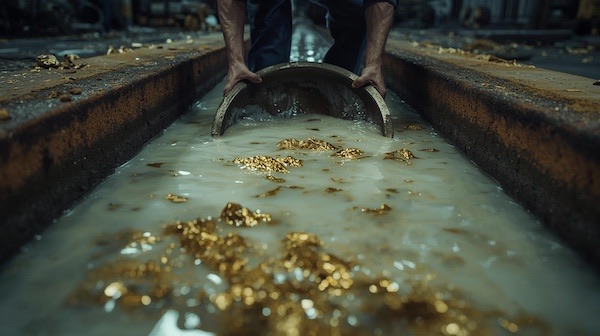
As chip manufacturing becomes more delicate, our smartphones become thinner. This is made possible by backgrinding. During this process, a diamond-grit wheel shaves the back of the wafer, producing a massive amount of fine silicon particles. Mixed with water, it creates a cloudy, flour-like sludge.
For years, this was treated as a liability. These particles are so fine they don't sink; they stay suspended, making the water impossible to reuse. In the old days, companies used chemicals (coagulants) to clump the sludge into "cake" blocks before paying to bury them in a landfill. The costs were three-fold: the water, the chemicals, and the dumping fees.
Since we began advocating for sustainability in 2014, we’ve promoted a core idea: Real sustainability is not a CSR liability—it’s a way to make a business more resilient. TSMC proved that throwing away high-purity silicon is quite literally throwing away money.
How TSMC Turned Waste into a Business
Like EDR, Taiwan’s lead in backgrinding wastewater "mining" was born from necessity. With no room for more landfills and the ESG requirements, TSMC had to find a circular solution.
While other methods (coagulation, flocculation, sedimentation) exist, they all involve chemical additives. In 2021, TSMC announced a success in physical regeneration—an upgraded version of the plate-and-frame filter press. They claimed to save 55 metric tons of chemicals in just six months.
Instead of trying to remove chemicals from "poisoned" silicon, they redesigned the process using:
-
Gravity and Force: High-pressure mechanical pressure forces wastewater through specifically designed plates and frames.
-
Nano-pore Filters: The filter cloths are designed with specific pore sizes and surface tension that allow trapping ultra-fine silicon particles on the surface.
The Suppliers and Proximity
If you’ve worked in a factory, you know that redesigning a process usually takes ages. Yet, TSMC and its suppliers took only two months of testing before green-lighting this technique.
According to CommonWealth Magazine, one of TSMC’s key partners is a company called Transcene Co. Ltd. (成信實業). Based in Southern Taiwan—far from the capital but only two hours from the northern hubs—they turn TSMC’s "silicon cakes" into silicon dioxide for use in steel production and building materials.
TSMC is now working on reusing these silicon cakes back in their own highly demanding production process. If they succeed, it will prove that investing in sustainability is a money-saving process, not a financial burden.
Note: During my research on CMP/backgrinding recycling, I found a fascinating study from Tohoku University in Japan. It turns out the review was conducted by two Taiwanese researchers (educated in Tainan) and one Japanese researcher. In this industry, that is no coincidence. (Resource: Research on CMP wastewater recycling - ScienceDirect)
The Insight for 2026
As we look at the massive fab builds in Arizona and Europe, the conversation needs to shift toward maximizing the value of scarce resources. A truly sustainable supply chain realizes that waste is just a resource in the wrong place. Taiwan fulfills that vision daily.
What else do you want to know about the "hidden champions" behind the Asian supply chain? Let me know!
In our final installment (Part 4), we will divert from physical solutions to the "biological" side of the fab: Membrane Bioreactors (MBR). We'll discover how bacteria are actually protecting the world’s most advanced chip manufacturing.
What is your #1 bottleneck in expanding your supply chain right now?
For more Asian insights, follow BuonX Consultancy founder Betty on LinkedIn.
Ready to embark on your sustainable supply chain? Join BuonX Consultancy in turning vision into daily practice. Contact us today.