Before "Utility" became the center of the AI discussion, Taiwan was already on a mission to solve the industrial water crisis. This is the first of a four-part series of our Beyond the Chips series, exploring one of the hidden champions: the water management infrastructure that makes high-tech manufacturing possible on this small island.
The Great Pivot: From Agriculture to Semiconductors
Thirty years ago, the government of Taiwan made a high-stakes bet to introduce the semiconductor industry to the island. (For those interested in the behind-the-scenes story, A Chip Odyssey is a documentary that tells the detailed story of how this labor-intensive society turned into a global chip manufacturing leader).
Today, that bet has paid off. But while semiconductors are the most prominent stars in the sky, a galaxy of satellite industries has emerged to support them. These are the hidden champions. Water management is arguably the most critical.
Currently, Taiwan leads the industry in several key technologies:
-
Ultra-Pure Water (UPW) Systems
-
Electro-Dialysis Reversal (EDR)
-
Backgrinding Wastewater Recycling
-
Membrane Bioreactor (MBR)
In this series, we will break down why Taiwan’s water scarcity became its greatest innovation driver and introduce these technologies over four articles.
The drivers behind this advancement were both natural constraints and high-profile public health hazards.
Nature’s Paradox: Too Much Rain, Not Enough Water
It sounds like a paradox: how can an island surrounded by the ocean actually run out of water? Taiwan was historically ill-suited for heavy industry due to three natural limitations:
-
Low Water Retention: As a seismic island with dramatic terrain, Taiwan receives three times the global average rainfall. Yet, 80% of that water flows directly into the ocean. Steep slopes and short rivers give the soil no time to absorb the rain.
-
The Siltation Struggle: While Taiwan built about 20 major reservoirs to capture rainfall, the island’s fragile geology leads to serious siltation, drastically reducing storage capacity over time.
-
Seasonal Uncertainty: Most water comes from typhoons, which are increasingly irregular due to climate change. Additionally, while the South is the hub for semiconductor manufacturing, the North has more stable rainfall. This creates a constant risk of drought for the factories in the South.
Learning from Tragedy: The Catalyst for Regulation
Taiwan’s technological advancement on sustainability, like everywhere else, wasn't just born from scarcity but was born from accountability. There are several high-profile incidents changed the national consciousness that's including:
-
The RCA Contamination: Radio Corporation of America (RCA) was caught dumping toxic solvents like TCE and PCE into groundwater.
-
The ASE Incident: Advanced Semiconductor Engineering (ASE) faced massive backlash for dumping wastewater containing heavy metals (Nickel).
These incidents impacted the health of residents and forced the government to implement world-class regulations, which gradually push a quiet revolution in wastewater recycling.
The Core of the Circular Model: Ultra-Pure Water (UPW)
At the heart of a modern fab is the UPW system. It’s not just a zero-waste goal; as TSMC has pointed out, it saves them millions of dollars while uncovering new economic value in what was once considered waste.
In these systems, water is stripped down to an extreme level—removing minerals, gases, and carbons until it’s pure at a "parts-per-trillion" scale. Once used, that water is graded, cleaned, and looped back in or downgraded to other purposes. According to TSMC, it recycles 80-90% of its process water.
As Taiwan operates the world’s most advanced 3nm and 2nm nodes, purity directly impacts yield. Taiwanese companies, such as Mega Union, have become leading players in this field.
Beyond the Zero-Waste Initiative: The Economic Value of Chemicals
However, it is not just about zero waste initiative, and UPW systems aren't just for saving water; they are chemical refineries that can "mine" the chemicals from wastewater for further utilisation, for example:
-
Sulfuric Acid: Recycled via vacuum distillation and reused for cleaning chips.
-
IPA (Isopropanol): Extracted via liquid-to-liquid extraction. If it is no longer pure enough for the fab, it is sold to other industries (like paint manufacturing) for further use.
The Insight
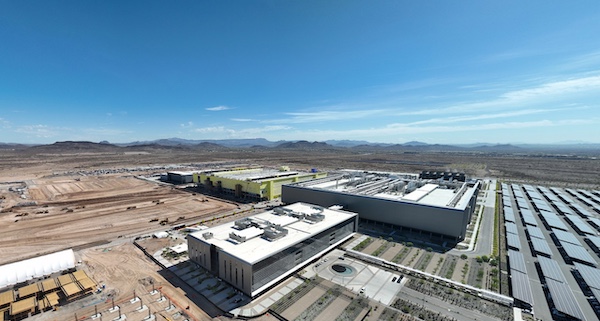
As booming semiconductor sites like Phoenix, Arizona, face similar water shortage concerns, the experience of the island in improving water usage efficiency might offer a proven solution.
In Part 2, we’re going to look at EDR— how it is the technology that can provide economic value while being sustainable.
What is your #1 bottleneck in expanding your supply chain right now?
For more Asian insights, follow BuonX Consultancy founder Betty on LinkedIn.
Ready to embark on your sustainable supply chain? Join BuonX Consultancy in turning vision into daily practice. Contact us today.
Comments are closed!